
A parent’s guide to in-season injury prevention
A Precautionary Tale For In-Season Athletes
Picture this: It’s the middle of your son or daughter’s competitive sports season, and they’re performing well. Their off-season strength and conditioning program paid off. They’re faster, stronger, jumping higher, and playing the best they’ve ever played. The private skills coach you hired is paying off too. The $200 cleats are holding up. The coach is happy. Your young athlete is smiling and having fun. Life is good.
You look away for a moment, talking with a group of parents complimenting your athlete’s performance. You look back to see them on the ground, holding their leg. Players on both teams take a knee. The athletic trainer runs onto the field with a medical bag, the head coach close behind. Cut to a fewdays later: you’re sitting in a doctor’s office staring at an X-ray while the doctor explains that your athlete tore their ACL.
Their season is over — and possibly part of next season too. You look over and see tears running down their face as you think, how could this happen? Was it the cleats? The footwork drills? The core strength? Did they need more off-season tournaments?
Why Youth Sports Injuries Happen In-Season
Thousands of families across the country are about to face this exact scenario. It might happen to a soccer player, football player, baseball player, softball player, or field hockey player — but for many, it will happen.
And it’s rarely because the athlete didn’t work hard enough, or because they had the wrong gear. It happens because the athlete wasn’t strong enough in the middle of the season to withstand the physical demands of their sport.
Here’s the common pattern: a young athlete trains strength and speed with a coach in the off-season and walks into preseason as a standout — strong, fast, agile, and impressive enough to win a starting spot. But once the competitive season begins, strength training gets cut. Maybe there’s no time.
Maybe it seems like “too much” on top of practices and games. What actually happens is the opposite of protection: cutting strength training during the season significantly increases injury risk.
Research shows that youth and high school athletes who do not strength train during their competitive season are THREE TIMES more likely to sustain an injury than athletes who maintain a consistent in-season strength training program (Hejna, William F., et al., NSCA Journal, 1982).
The Science of Detraining: Why Strength Training Can’t Stop In-Season
The solution to preventing in-season sports injuries is simpler than most parents expect. If your athlete trained in the weight room two to three times per week in the off-season (typically a six-month block), they should drop to a maintenance strength training schedule of at least once per week once the competitive season begins. This single weekly session is often enough to preserve off-season strength gains and reduce injury risk.
Here’s why this matters: it only takes five days without training for the body to begin detraining — the partial or complete loss of strength, speed, and power that occurs when consistent training stops. Detraining happens in predictable phases, with different physical qualities (power, speed, strength, and aerobic capacity) declining at different rates:
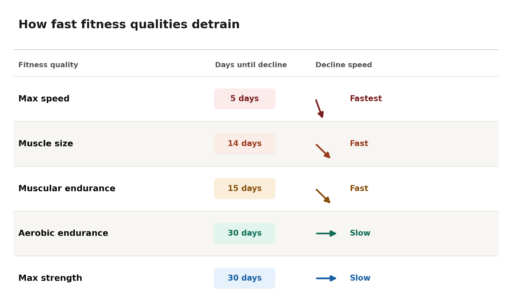
Figure 1: Tudor Bompa, Periodization (2018)
As these physical qualities decline, injury risk rises. If full detraining occurs within just 30 days, imagine the cumulative strength and power loss over a full three-month competitive season with no maintenance training — or worse, if an athlete goes straight from one season into another with no off-season strength work at all. In performance training, the principle holds true: use it or lose it.
How to Prevent Sports Injuries With In-Season Strength Training
The good news: youth sports injuries like ACL tears are often preventable. They aren’t random bad luck — they’re frequently the predictable result of a body that never got the chance to maintain the strength and resilience it built in the off-season.
At Elias Sports Performance in Glastonbury, CT, our in-season strength and conditioning programs are designed specifically to keep young athletes strong, resilient, and injury-resistant throughout a demanding competitive season — without adding unnecessary fatigue or cutting into practice and game time.
For most athletes, just one or two focused strength sessions per week is enough to protect the hard-earned gains from the off-season and significantly reduce the risk of season-ending injury.
Don’t wait for the X-ray to find out your athlete needed more support. Talk to one of our coaches today and give your son or daughter the best chance at a healthy, successful — and complete — sports season.